Small Town, Big Talent: The Unlikely American Hotbeds Churning Out Pro Athletes
Pop quiz: Where do you think the greatest athletes in America come from?
Los Angeles? New York? Miami? Sure, the big cities get plenty of credit. But spend a little time digging through the birthplaces of NFL rosters, NBA draft classes, and MLB lineups, and a surprising pattern emerges. Scattered across the country — in places with one stoplight, a diner on Main Street, and a Friday night football game that the whole town attends — are communities that have been quietly producing elite professional athletes for generations.
This isn't a coincidence. There's something specific happening in these places, something that the biggest cities and best-funded programs often can't replicate. And once you understand it, you'll never look at a small town the same way again.
The Compton Effect (And Why It Applies Everywhere)
Compton, California has a population of around 95,000 people. By major city standards, that's a neighborhood. And yet Compton has produced a staggering number of elite athletes — NFL players, NBA contributors, and most famously, a tennis dynasty in the Williams sisters. Venus and Serena didn't emerge from a pristine country club. They learned the game on cracked public courts with a father who believed in them before anyone else did.
 Photo: Compton, California, via c8.alamy.com
The Compton story is often told as a uniquely urban tale, but the underlying ingredients — tight community, intense local competition, a coach or mentor who sees potential before it's obvious — are exactly what you find in small towns across rural America.
Clarkston, Georgia, a suburb of Atlanta but a world away from its resources, became a refugee resettlement hub and quietly developed into one of the most remarkable soccer talent pipelines in the country. Kids who'd grown up playing in refugee camps brought a hunger and technical skill that transformed local youth leagues. The story was eventually turned into a book and a documentary, but the core truth is simple: extraordinary athletes emerge from extraordinary circumstances, not extraordinary zip codes.
 Photo: Clarkston, Georgia, via www.clarkstonga.gov
Friday Night Factories
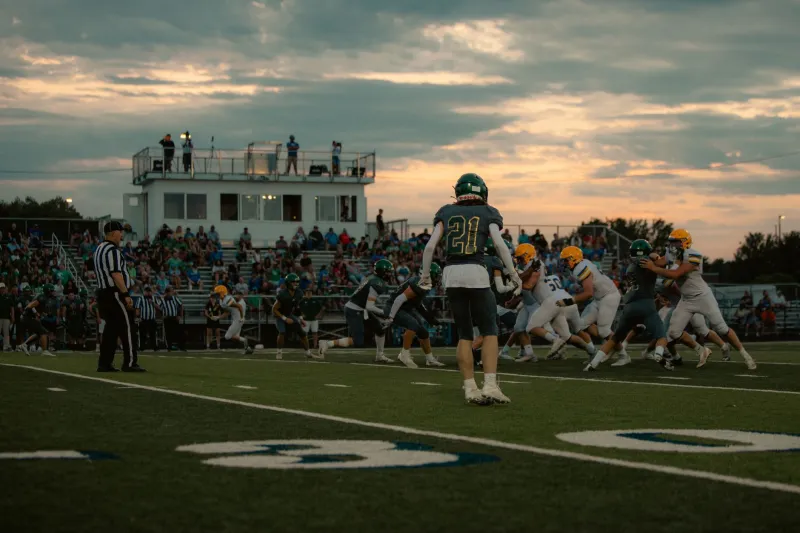
In Texas, high school football isn't just a sport — it's a civic institution. Towns like Celina, Southlake, and Carthage have produced NFL talent at rates that would embarrass programs in much larger cities. The reason isn't complicated: in a small town, football is everything. The best athletes play it. The community invests in it. The coaching staffs stay for decades, building systems and relationships that turn raw talent into polished prospects.
Coach longevity is a massively underrated factor. In big-city programs, coaches come and go, chasing better opportunities. In small towns, a great coach can spend 20 or 30 years in the same gym or on the same field, building a culture that becomes self-reinforcing. Young players grow up watching older kids from their town make it to the next level. That visibility creates belief — and belief is the first ingredient in every elite athlete's story.
Aliquippa, Pennsylvania is a steel town that's seen better economic days, but its football program has produced an almost absurd number of NFL players relative to its population. Names like Mike Ditka, Tony Dorsett, and Darrelle Revis all came through that small Western Pennsylvania community. The culture of toughness, competition, and local pride created conditions where talent didn't just appear — it got forged.
 Photo: Aliquippa, Pennsylvania, via www.wkbn.com
Basketball in the Corn Belt
People assume basketball is a city game, and in many ways it is. But some of the sport's most impactful players have come from places so small they barely register on a map.
Larry Bird grew up in French Lick, Indiana — a town of fewer than 2,000 people. There wasn't much to do in French Lick except play basketball, and Bird played obsessively, developing a skill set and competitive intensity that would eventually make him one of the greatest players in NBA history. The isolation wasn't a disadvantage. It was fuel.
The pattern repeats across the Midwest. Small Indiana towns have been feeding the basketball pipeline for so long that the state has its own mythology around the sport. Gyms that seat more people than the surrounding town's population. Tournaments that the whole county shuts down to attend. Kids who grow up knowing that basketball is their ticket — and who work accordingly.
What Small Towns Do That Big Programs Can't
There are a few specific things happening in these communities that are genuinely difficult to manufacture at scale.
First, there's visibility. In a small town, a talented 12-year-old is known by everyone. The local coach sees them constantly. The community invests in them emotionally. That attention and expectation can be a powerful motivator in a way that getting lost in a massive urban program simply isn't.
Second, there's multi-sport development. Small schools often don't have the roster depth to let athletes specialize early, so a kid plays football in the fall, basketball in the winter, and baseball in the spring. That cross-sport athleticism — the footwork from basketball, the hand-eye coordination from baseball, the physicality from football — creates more complete athletes than early specialization ever could.
Third, and maybe most importantly, there's hunger. In a small town, making it to the professional level isn't just a personal dream — it's an escape route, a source of community pride, and a validation of everything that town believes about itself. That weight can crush some athletes. For others, it's exactly the pressure they need to reach their ceiling.
Greatness Has No Zip Code
The next time you're watching an NFL Sunday or an NBA playoff game and you see a player's hometown flash on the screen — some dot on the map you've never heard of — take a second to think about what that place gave them.
A coach who believed in them. A community that showed up every Friday night. A gym that was always open. A culture that told them working hard was the only option.
America's small towns aren't just producing athletes. They're producing a particular kind of athlete — one shaped by scarcity, community, and an almost irrational belief that they can compete with anyone, anywhere.
And over and over again, they're proving it.