Small City, Massive Heart: The American Sports Towns That Don't Need a Big League to Prove Anything
Small City, Massive Heart: The American Sports Towns That Don't Need a Big League to Prove Anything
The conventional sports map of America tends to look the same. New York. Los Angeles. Chicago. Dallas. The big metros with the big franchises and the big TV markets. Flip on any national broadcast and that's the world you'll find — gleaming arenas, celebrity fans, and the familiar logos of dynasties with global brand recognition.
But spend any real time traveling across this country and you'll discover something the national sports media often misses: some of the most genuinely passionate, historically rich, and culturally significant sports communities in America don't have a single major-league team to their name. They don't need one.
Lawrence, Kansas: Where Basketball Lives in the Walls
If you've never been to a Kansas Jayhawks basketball game at Allen Fieldhouse, you've missed one of the most electric sports experiences America has to offer — and that's not an exaggeration. Lawrence is a college town of around 100,000 people sitting on the eastern edge of the Kansas plains. There's no NBA team within hundreds of miles. And yet, when the Jayhawks tip off on a cold winter night, the noise inside that building rivals anything you'll hear in any arena in any city in the country.
 Photo: Allen Fieldhouse, via media.zenfs.com
This is where basketball was invented — James Naismith himself coached the Jayhawks — and the town has never stopped treating the sport like sacred ground. The fan base spans generations. Grandparents who watched Wilt Chamberlain play here bring their grandchildren to watch the next era of stars. The continuity is remarkable. The passion is real and unperformed.
Lawrence has also sent a steady stream of talent into the NBA over the decades. The pipeline doesn't stop because there's no pro team in town. If anything, it flows more freely because the college program IS the town's team, and everyone invests accordingly.
Tuscaloosa, Alabama: Football as a Way of Life
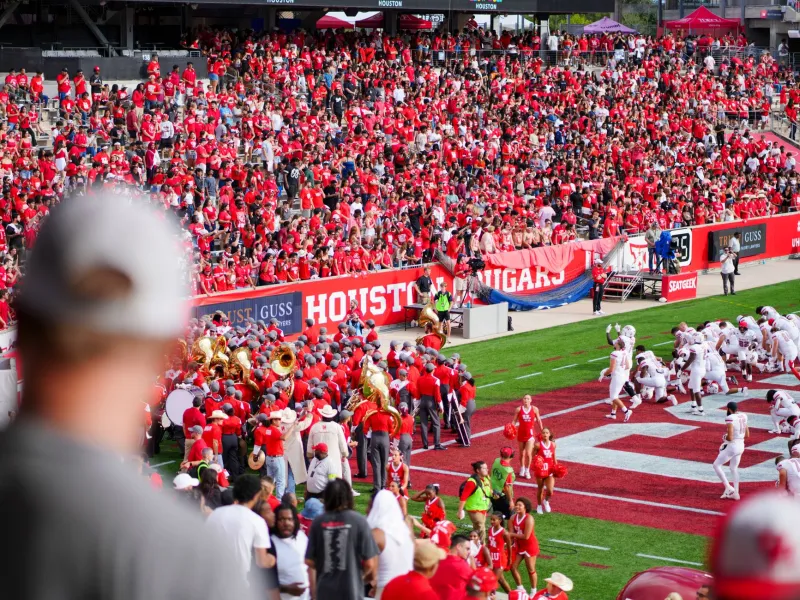
Alabama football is not a sport in Tuscaloosa. It's a civic religion. The city of around 100,000 people swells dramatically on game days, with fans driving in from across the state and beyond to pack Bryant-Denny Stadium, which holds over 100,000 people. Let that sink in: a stadium in a mid-sized college town holds more people than the population of the city itself.
 Photo: Bryant-Denny Stadium, via bunny-wp-pullzone-5vqgtgkbhi.b-cdn.net
The closest NFL franchise is hours away. It doesn't matter. Alabama fans don't feel like they're settling for a lesser product. They feel like they have the best product — and the trophy case backs them up. The Crimson Tide's run of national championships over the past two decades has turned this program into a legitimate dynasty, the kind that gets compared to the most successful franchises in professional sports history.
What makes Tuscaloosa special beyond the wins is the culture around the team. Football here isn't something you watch on Saturdays. It's something you prepare for, talk about, and live with all week. The tailgate culture alone could fill a book. The community identity is inseparable from the program in a way that most professional sports franchises spend millions of marketing dollars trying to manufacture and rarely achieve.
Green Bay, Wisconsin: The Exception That Proves the Rule — and Then Some
Okay, Green Bay is technically a major-league city because it has the Packers. But with a population of under 110,000, it's by far the smallest market in the NFL, and it functions more like a small sports town that happens to host a legendary franchise than a traditional big-league city.
 Photo: Green Bay Packers, via cdn.freebiesupply.com
The Packers aren't just the local team in Green Bay. They're community-owned — the only non-profit, community-owned major-league franchise in American professional sports. Residents own shares. They pass those shares down through their families. The waiting list for season tickets is so long that people joke about putting their newborns on it immediately after birth.
Green Bay is proof of something important: the size of the city has almost nothing to do with the depth of its sports culture. What matters is the relationship between the community and the team, and in Green Bay that relationship is as close and as genuine as it gets anywhere in the country.
Boise, Idaho: The Underdog Capital of the Mountain West
Boise doesn't have a major-league team in any sport. It has Boise State football, and for a large stretch of the country's sports consciousness, that's been more than enough.
The Broncos built their national reputation on the back of a blue turf field and a relentless willingness to compete against programs with far greater resources. The 2007 Fiesta Bowl upset of Oklahoma — one of the most celebrated upsets in college football history — put Boise on the national map in a way the city never quite expected. Suddenly everyone knew where Boise was, and the fans there have been carrying that flag with enormous pride ever since.
What's striking about Boise is how the sports culture has grown around that identity. The city embraces being the underdog. It celebrates effort, resourcefulness, and the refusal to be intimidated by bigger names and bigger budgets. That's not a marketing slogan. That's a genuine community value, and it shows up in the stands every single game.
Why Small Sports Towns Matter
There's a tendency in American sports media to treat passion as something that scales with market size. Bigger city, bigger fan base, bigger stakes. But the evidence on the ground tells a very different story.
Some of the most committed, knowledgeable, and emotionally invested sports communities in this country exist in places that will never make the shortlist for a major-league expansion franchise. The fans in these towns don't have the luxury of a rotating carousel of star athletes to keep them entertained. They invest in their teams through losing seasons and coaching changes and recruiting busts and all the difficult stretches that test whether your love of the sport is real.
Spoiler: it is. In Lawrence and Tuscaloosa and Boise and dozens of other communities like them across this country, the love of sport doesn't need a luxury suite or a nationally televised prime-time slot to stay alive.
It just needs a game. And people who care enough to show up.