In the heat of competition, with millions watching and championships on the line, referees and officials face impossible pressure to make split-second decisions that can alter the course of sports history. Most of the time, they get it right. But when they get it wrong — or when their correct calls feel wrong to half the audience — the reverberations can last for decades.
These aren't just bad calls or missed calls. These are the officiating decisions that literally changed the trajectory of franchises, ended dynasties, and created legends out of controversy. They're the moments that remind us that sometimes the most influential person on the field is the one wearing stripes.
The Phantom Foul That Stole a Championship
Game 6 of the 2002 Western Conference Finals between the Sacramento Kings and Los Angeles Lakers remains one of the most controversial games in NBA history. With 11.8 seconds left and the Kings leading by one, referee Dick Bavetta called a foul on Mike Bibby for allegedly hitting Kobe Bryant on a drive to the basket.
Here's the problem: replays showed minimal, if any, contact. The call sent Bryant to the free-throw line, where he tied the game and eventually helped force overtime. The Lakers won in OT and went on to capture the series in seven games, advancing to the NBA Finals.
That single whistle didn't just cost Sacramento a game — it potentially cost them their best chance at a championship in franchise history. The Kings had built a beautiful, free-flowing team around Chris Webber, Vlade Divac, and Peja Stojakovic that played basketball the way it was meant to be played. They never got that close again.
Former NBA referee Tim Donaghy later claimed the league wanted the Lakers to win, adding fuel to conspiracy theories that still burn today. Whether you believe the fix was in or chalk it up to human error, the result was the same: one call changed everything.
The Tuck Rule That Built a Dynasty
January 19, 2002. The New England Patriots trailed the Oakland Raiders 13-10 in a snowy AFC Divisional playoff game when Tom Brady appeared to fumble while being sacked by Charles Woodson. The Raiders recovered what looked like a game-sealing turnover with less than two minutes remaining.
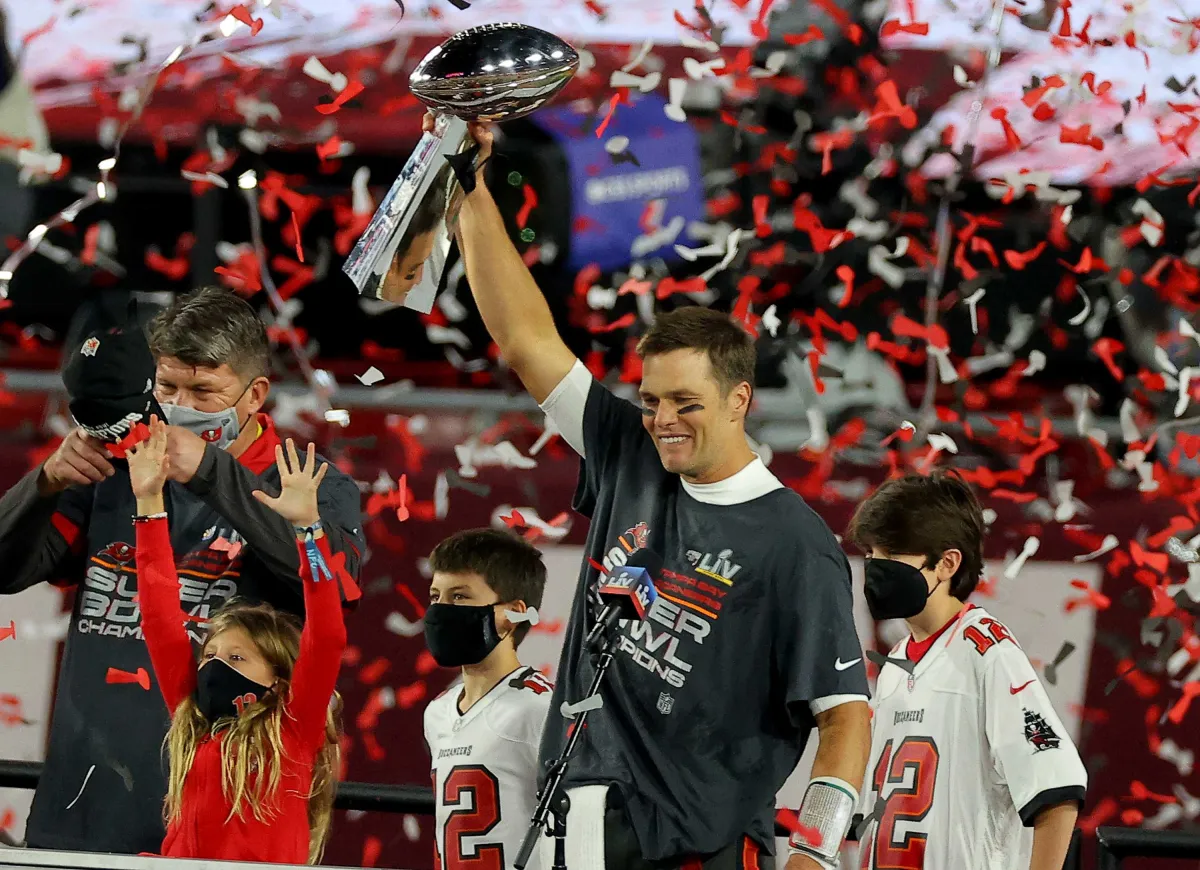 Photo: Tom Brady, via kubrick.htvapps.com
Then referee Walt Coleman reviewed the play and invoked the "tuck rule" — an obscure regulation stating that if a quarterback loses the ball while bringing it back toward his body after starting a throwing motion, it's an incomplete pass, not a fumble.
The Patriots kept the ball, kicked a field goal to tie the game, and won in overtime. They went on to win the Super Bowl, launching the Brady-Bill Belichick dynasty that would dominate the NFL for two decades.
The Raiders? They haven't won a playoff game since. One application of an arcane rule literally altered the balance of power in the NFL for the next 20 years. The rule was eventually eliminated in 2013, but the damage to Oakland — and the benefit to New England — was already permanent.
The Hand of God That Shocked the World
Sometimes the most controversial calls are the ones that don't get made. In the 1986 World Cup quarterfinals between Argentina and England, Diego Maradona punched the ball into the net with his left hand to give Argentina a 1-0 lead. The goal should have been disallowed for handball, but referee Ali Bin Nasser and his linesman missed the obvious infraction.
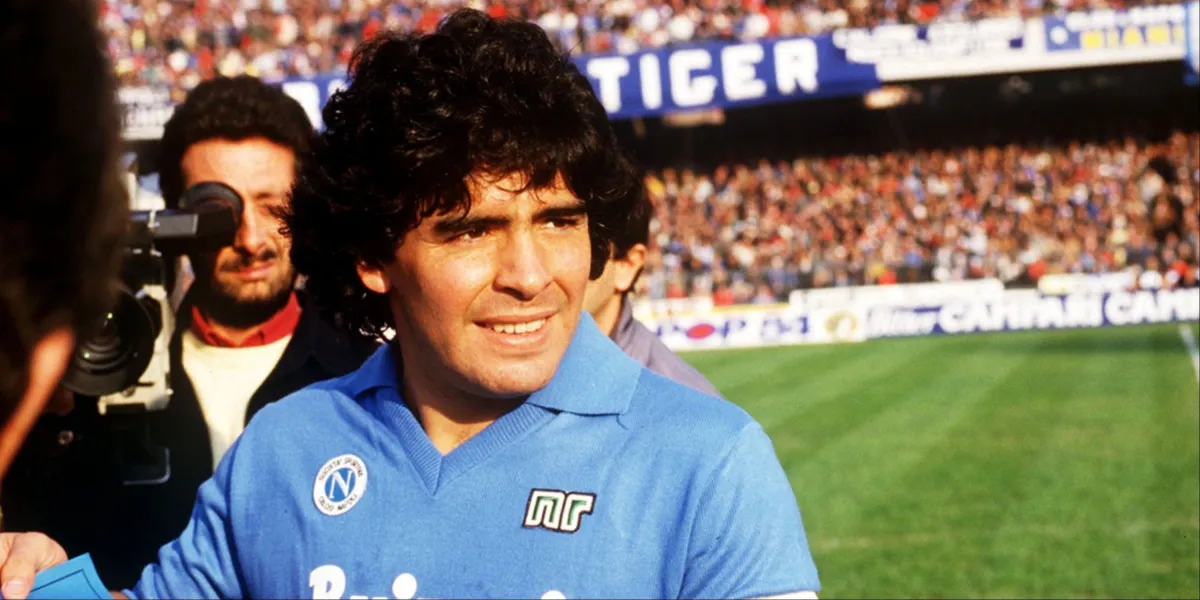 Photo: Diego Maradona, via static0.givemesportimages.com
Maradona later claimed it was scored "a little with the head of Maradona, and a little with the hand of God." The goal stood, Argentina won 2-1, and Maradona's legacy was forever intertwined with one of the most blatant examples of cheating in sports history.
But here's the twist: four minutes later, Maradona scored what many consider the greatest goal ever — weaving through five England defenders before slotting home a masterpiece. One missed call gave us one of soccer's most infamous moments, immediately followed by one of its most beautiful.
The Interference That Wasn't
Super Bowl XL in 2006 between the Pittsburgh Steelers and Seattle Seahawks was supposed to be a celebration of two hard-working, blue-collar franchises. Instead, it became a referendum on officiating that still haunts Seahawks fans today.
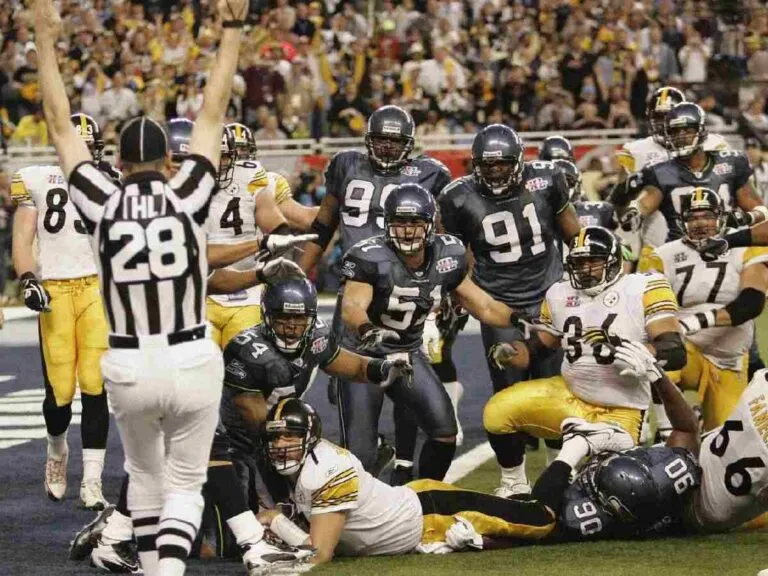 Photo: Super Bowl XL, via firstsportz.com
The most controversial moment came when Pittsburgh quarterback Ben Roethlisberger appeared to be stopped short of the goal line on a crucial touchdown attempt. Referee Bill Leavy ruled it a touchdown, giving the Steelers a 14-3 lead. Replays were inconclusive, but many observers believed Roethlisberger was stopped.
That wasn't the only questionable call. A holding penalty on Seattle's Matt Hasselbeck after he threw an interception — for making a tackle on the return — epitomized the Seahawks' frustration. Pittsburgh won 21-10, but the victory felt hollow to many neutral observers.
Leavy later admitted he made mistakes in the game, but apologies don't restore championship opportunities. The Seahawks wouldn't get another Super Bowl chance until 2013, and by then, most of that 2005 team was gone.
The Goal That Never Was
The 2010 World Cup Round of 16 match between England and Germany was delicately poised at 2-1 to Germany when England's Frank Lampard struck a shot that hit the crossbar and bounced clearly over the goal line before spinning back out. It was obviously a goal to everyone in the stadium and watching on television.
Everyone except the officials, who waved play on. England went into halftime trailing 2-1 instead of tied 2-2, and Germany eventually won 4-1. The missed call didn't just cost England a goal — it sucked the life out of their World Cup campaign and highlighted the need for goal-line technology in soccer.
FIFA finally introduced goal-line technology at the 2014 World Cup, but it came four years too late for England. Sometimes it takes a controversy of this magnitude to force necessary changes, but that's cold comfort for the team that got eliminated because of it.
The Pass Interference That Never Happened
January 20, 2019. NFC Championship Game. The New Orleans Saints were driving for a potential game-winning score against the Los Angeles Rams when Drew Brees threw a pass to Tommylee Lewis. Rams defender Nickell Robey-Coleman arrived early and delivered a helmet-to-helmet hit that should have been flagged for both pass interference and unnecessary roughness.
No flag came. The Saints had to settle for a field goal, the Rams tied the game, and Los Angeles won in overtime. Instead of heading to Super Bowl LIII, the Saints watched from home as the Rams lost to the Patriots.
The no-call was so egregious that the NFL changed its rules the following season to allow pass interference to be reviewed via replay. But like most rule changes that come after controversies, it was too little, too late for the team that got screwed.
The Human Element
What makes these moments so fascinating isn't just their impact — it's what they reveal about the nature of sports itself. We like to think games are decided by skill, preparation, and execution, but sometimes they're decided by human error or judgment calls that could go either way.
Referees and officials are human beings making difficult decisions in real-time under enormous pressure. They don't have the benefit of slow-motion replays or multiple camera angles in the moment. They see what they see, make their call, and live with the consequences.
The problem is that their consequences become everyone else's consequences too. Players, coaches, fans, and entire organizations have to live with decisions made in split seconds by people who go home after the game while everyone else deals with the fallout for years.
Technology vs. Tradition
These controversial moments have accelerated the adoption of instant replay, goal-line technology, and other technological aids to officiating. But they've also sparked debates about how much technology is too much, and whether eliminating human error also eliminates some of the drama and unpredictability that makes sports compelling.
There's something to be said for both sides. Technology makes games more fair and accurate, but it also slows them down and can make them feel sterile. The human element of officiating — including the possibility of mistakes — has always been part of sports' appeal.
The Lasting Legacy
These calls didn't just change games — they changed the way we think about fairness, technology, and the role of officials in sports. They created conspiracy theories, sparked rule changes, and gave us stories we're still talking about decades later.
Maybe that's the real lesson: in sports, as in life, sometimes the most important moments aren't the ones we plan for. They're the ones that happen in the space between intention and execution, between what should be and what is.
One whistle. One call. One moment that reminds us that even in our most organized, rule-bound competitions, chaos is always just a split second away.